











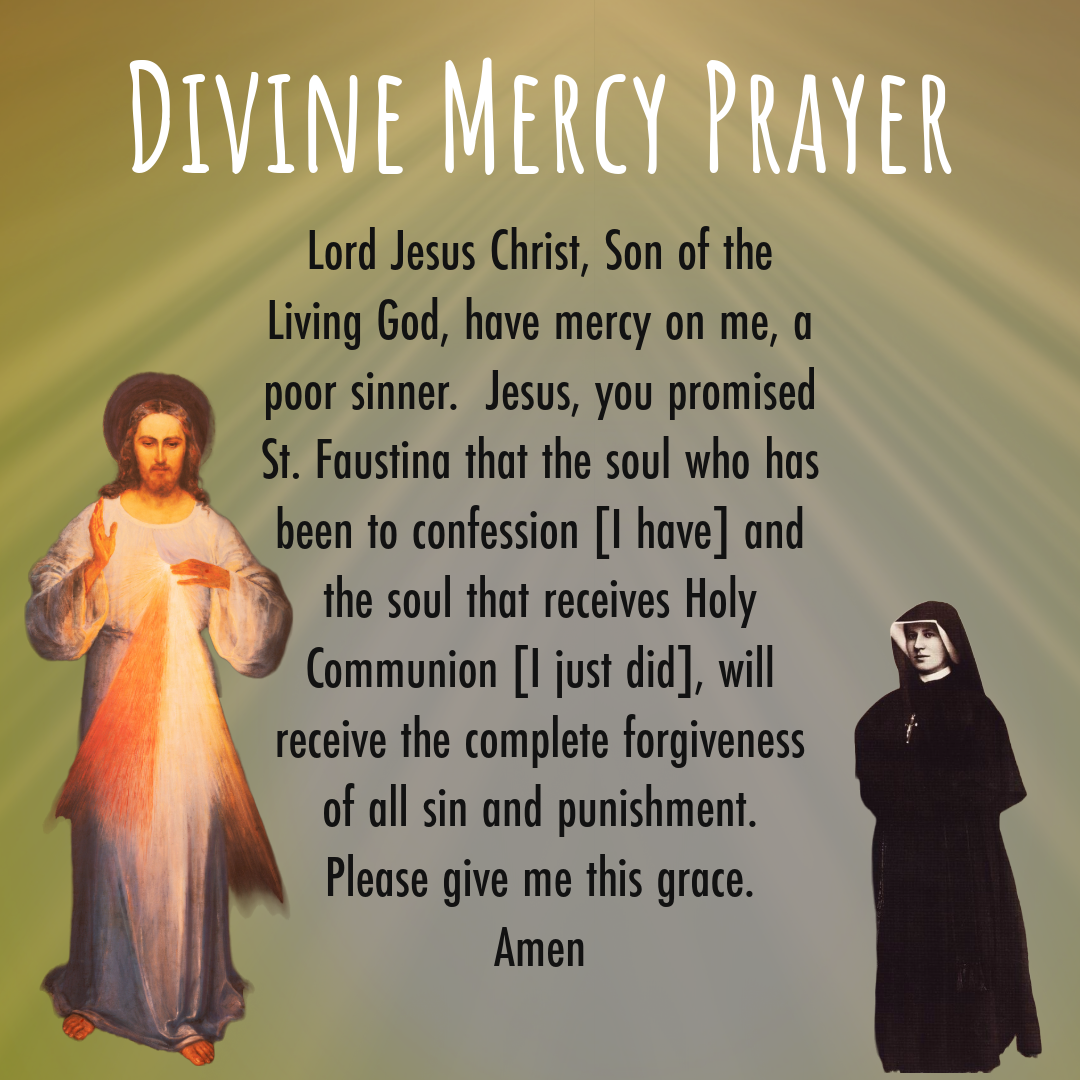
"Tell the whole world about My inconceivable mercy. I desire that the Feast of Mercy be a refuge and shelter for all souls, and especially for poor sinners. On that day the very depths of My tender mercy are open. I pour out a whole ocean of graces upon those souls who approach the Fount of My Mercy. The soul that will go to Confession and receive Holy Communion shall obtain complete forgiveness of sins and punishment. On that day all the divine floodgates through which graces flow are opened. Let no soul fear to draw near to Me, even though its sins be as scarlet." (Diary #699)
(Note: going to confession on Divine Mercy Sunday itself is not an obligation. The requirement is to be in a state of grace.)
Divine Mercy Sunday Explained
Father Chris Alar, MIC, walks you through exactly what to do to receive the grace of the extraordinary promise Jesus offers on this one day of the year: Divine Mercy Sunday.
On that day all the divine floodgates through which graces flow are opened. Let no soul fear to draw near to Me, even though its sins be as scarlet. My mercy is so great that no mind, be it of man or of angel, will be able to fathom it throughout all eternity.
(Diary, 699)
Daily Emails of Writings from the Diary of St. Faustina
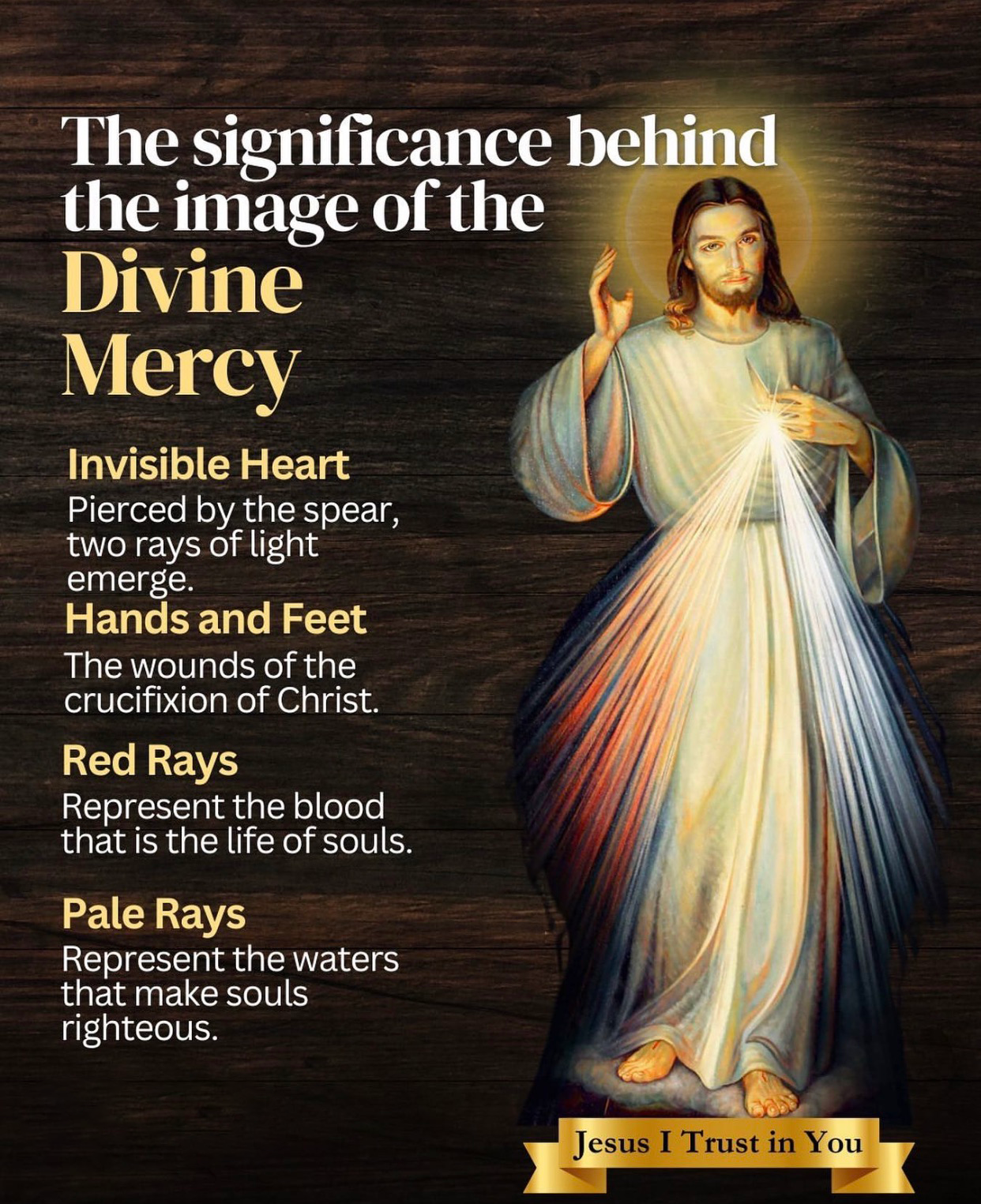
The Divine Mercy Image
The origin of the Divine Mercy image is linked to the vision that Sister Faustina had in Plock on February 22, 1931, during which Christ expressed His will for her to paint such an image and to inscribe the following below: Jesus, I trust in You.
This image was painted by Adolfo Hyla and became famous for the graces received by the faithful; it is the most widely distributed in the world. In this way, Jesus’ request to St. Faustina was fulfilled: “I desire that this image be venerated first in your chapel and (then) throughout the world.”
Each element of the painting has a profound significance, which we explain here:
1. Invisible heart: From the heart of Jesus, pierced by the lance, two rays emerge: one red and one pale.
2. Pale ray: Symbolizes the water that justifies souls.
3. Red ray: Symbolizes the blood, which is the life of souls.
4. Hands and feet: Bear the signs of the crucifixion endured by Jesus.